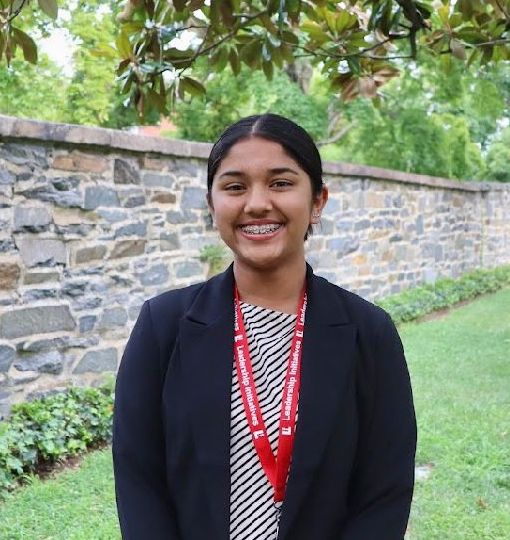

From Childhood Imagination to Real Medical Innovation
When Anagha was little, she played doctor with stuffed animals. It was innocent. Imaginative. The kind of childhood game that usually fades into memory.
Except it didn’t.
By the time she entered high school, that curiosity had sharpened into something far more serious. While most freshmen were still figuring out lockers and class schedules, Anagha was diving into Advanced Medical Neuroscience through an internship at Georgetown University, grappling with concepts that intimidate most adults.
That early fascination with medicine never stayed theoretical. She wanted to understand how the human brain actually works. Then she wanted to know how that knowledge could help real people.
So she went further.
She joined an international public health team working on healthcare challenges in Bauchi State, Nigeria. She became the lead author on a neuroscience paper exploring the computational power of trained neurons, research now moving toward publication.
At an age when most students are told to “wait,” Anagha was already doing the work.
Where Curiosity Meets Execution
Loving medicine was never the hard part. Turning that interest into something tangible was. That shift happened when Anagha joined Prequel.
Inside the programme, she launched Media Curators, a real project helping local businesses grow through user-generated content. It was not framed as a school assignment. There was no rubric to hide behind.
There were real clients. Real feedback. Real consequences. Reflecting on that moment, she shared:
“When I was talking to Salman, he gave me so many ideas on how to fuse medicine and entrepreneurship and start accelerating my career within months.”
What she learned quickly was that ambition alone does not carry you through complexity. Systems do.
Prequel gave her structure. Mentorship. A way to test ideas quickly and iterate without fear. As she put it:
“The programme gave us the resources we actually needed to succeed in a niche that felt overwhelming at first.”
Medicine stopped being something she dreamed about. It became something she could build around.
Building More Than a Resume
Anagha didn’t stop at projects. She noticed something missing.
Teens interested in medicine often felt isolated, unsure how to explore the field without expensive programmes or insider access. So she created what she wished had existed earlier.
Medicine Marvels was born.
A nonprofit built to give teens a platform to explore medical careers, share resources, and learn together. It wasn’t symbolic leadership. It required coordination, communication, and consistency.
Between high school, internships, research, entrepreneurship, and nonprofit leadership, her schedule was demanding. But the pattern was clear. She wasn’t stacking activities. She was building a direction.
Why This Matters (Especially Now)
College admissions offices are not impressed by interest alone. They are overwhelmed by it.
What stands out is evidence.
Students like Anagha do not just say they care about medicine. They show it through sustained, real-world work that compounds over time.
This is the same pattern seen across Prequel students:
- Jean Paul breaking a verified world record at 12
- Kamilla building and launching a social app with real users
- Sophie cold-emailing her way to interviews with world-class musicians
- Ethan turning a simple idea into hundreds of dollars in revenue
None of these started with certainty. They started with action.
Anagha’s Advice to Other Students
Anyone can build something meaningful. That does not mean it’s easy. It means it’s learnable.
The skills you develop by building early compound far beyond college applications. They shape how you think, how you solve problems, and how seriously others take your ideas.
Anagha’s journey is not about being exceptional. It’s about refusing to wait.
Ready to Build Something Real?
Anagha didn’t stumble into this path. She chose it, then committed to learning how to execute.
If you’re a student who wants to move beyond passive participation, or a parent looking for proof that early initiative actually matters, Prequel exists for exactly this reason. Join the next Prequel cohort and see what you can achieve.
Frequently Asked Questions
What age should students start building serious projects?
Students can start as early as 11 or 12 if they have the right structure. What matters is not age but guidance and accountability.
Does research or entrepreneurship matter more for college admissions?
Neither matters alone. Admissions officers look for depth, consistency, and real outcomes in one primary direction.
Is Prequel only for future doctors or engineers?
No. Prequel supports students across science, technology, business, media, and creative fields.
How is Prequel different from traditional enrichment programmes?
Prequel prioritises real-world execution, measurable outcomes, and long-term mentorship rather than short-term credentials.
Can students balance Prequel with schoolwork?
Yes. Students learn prioritisation and execution, which often improves academic performance rather than harming it.


